"Embarrassment was a design material, as real as the audio signal. The best accommodation is the one nobody else in the room can see."
Heading
Tell me about that spatial model — the "room" concept.
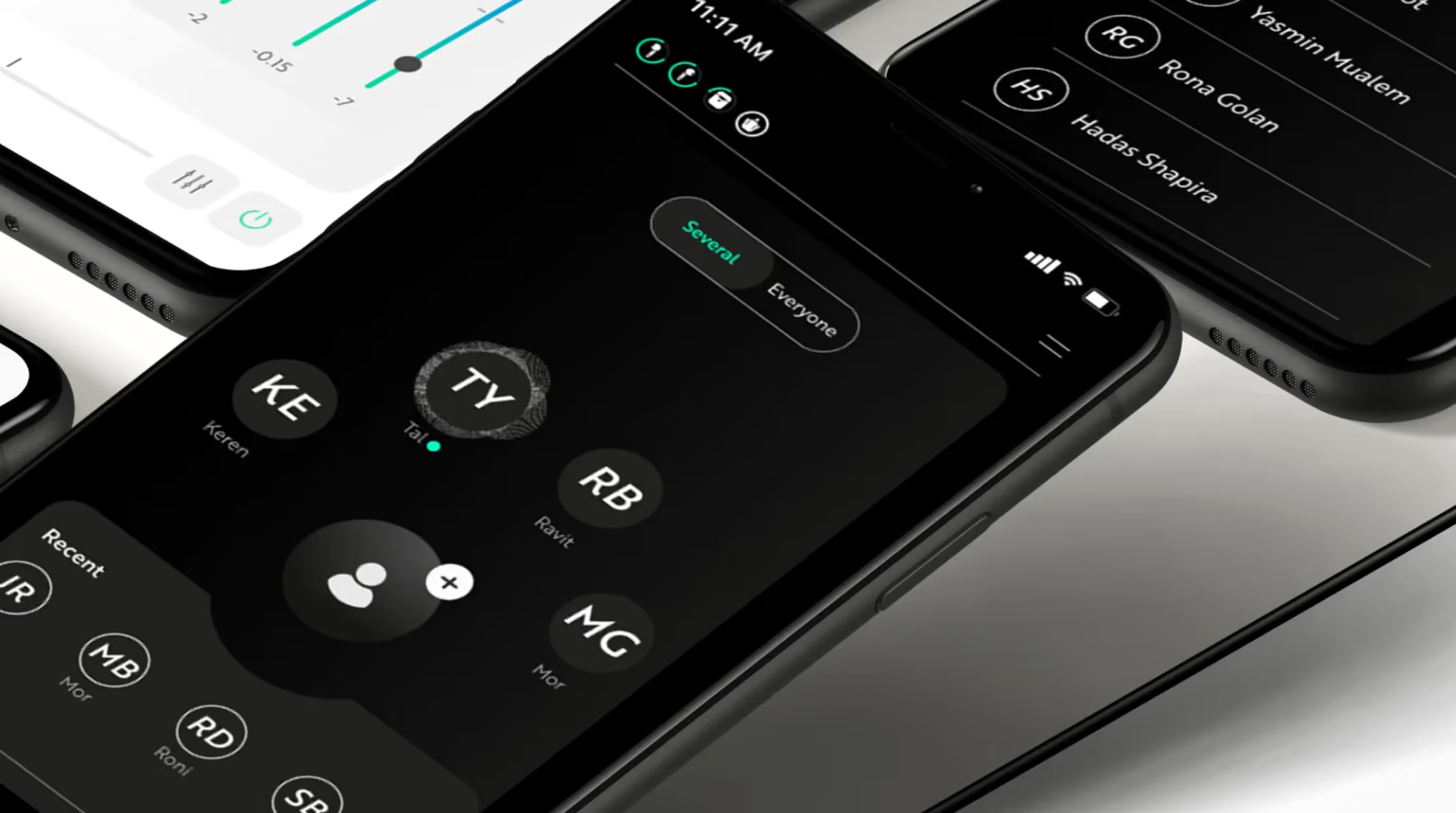
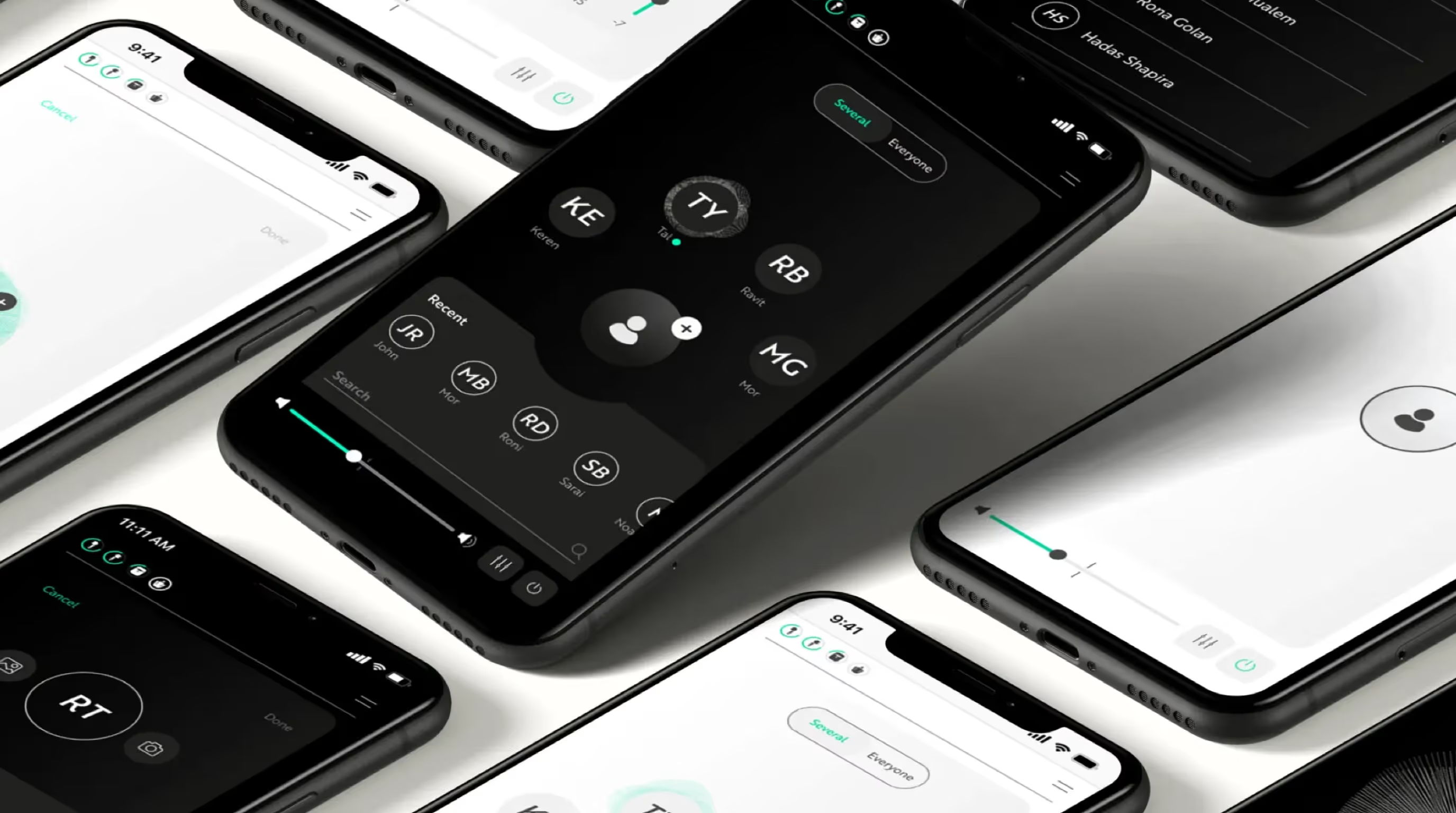
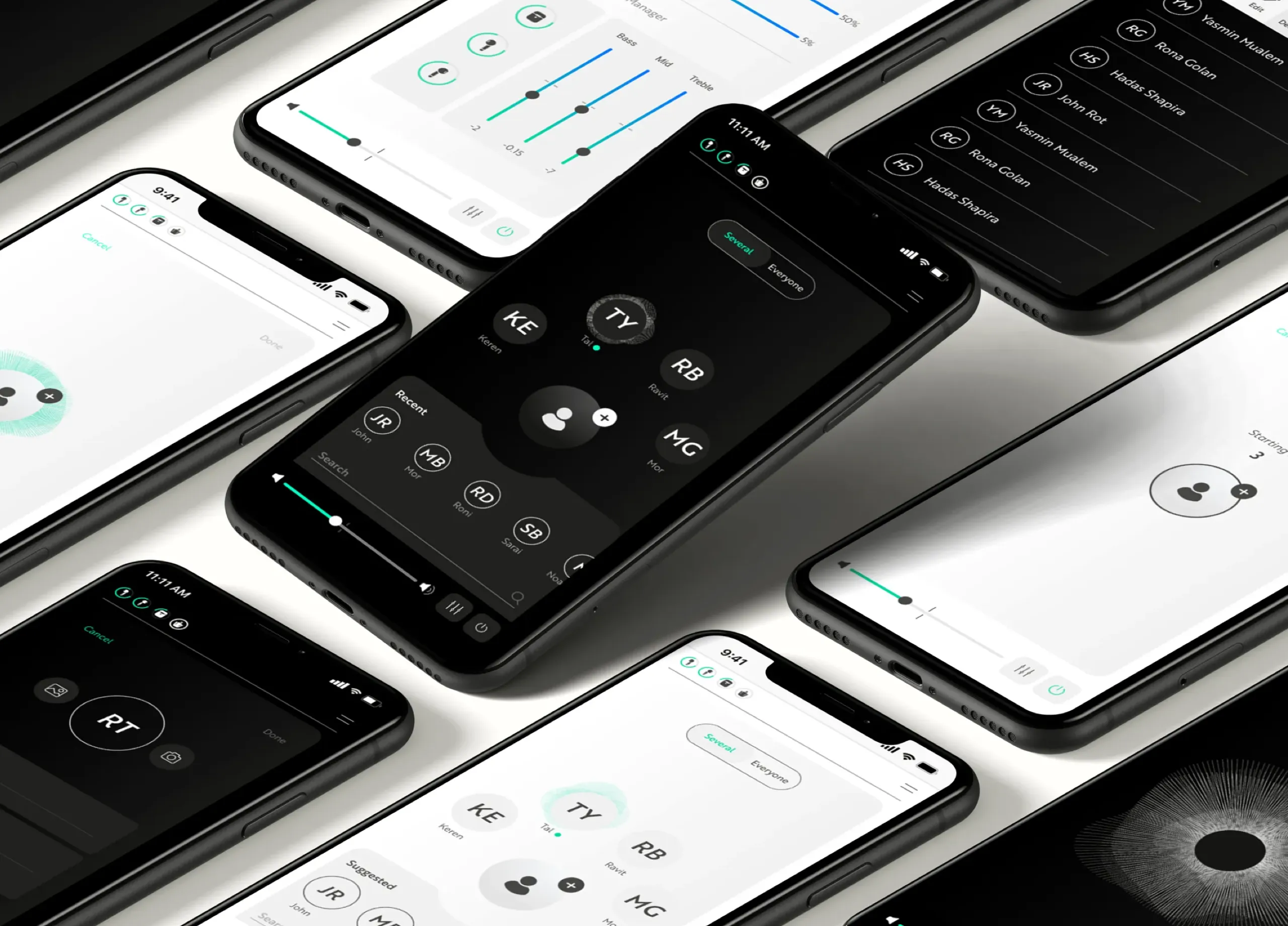
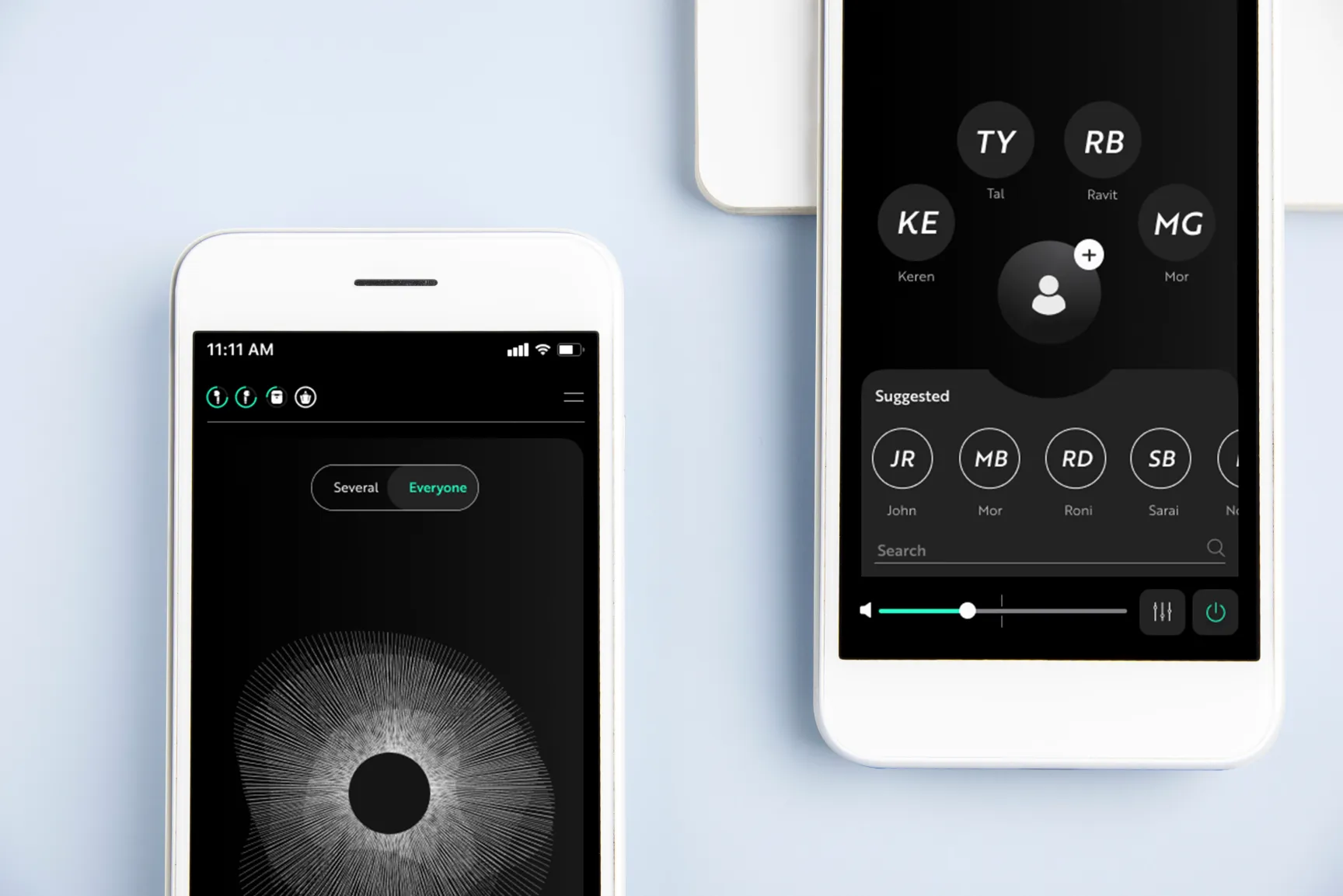
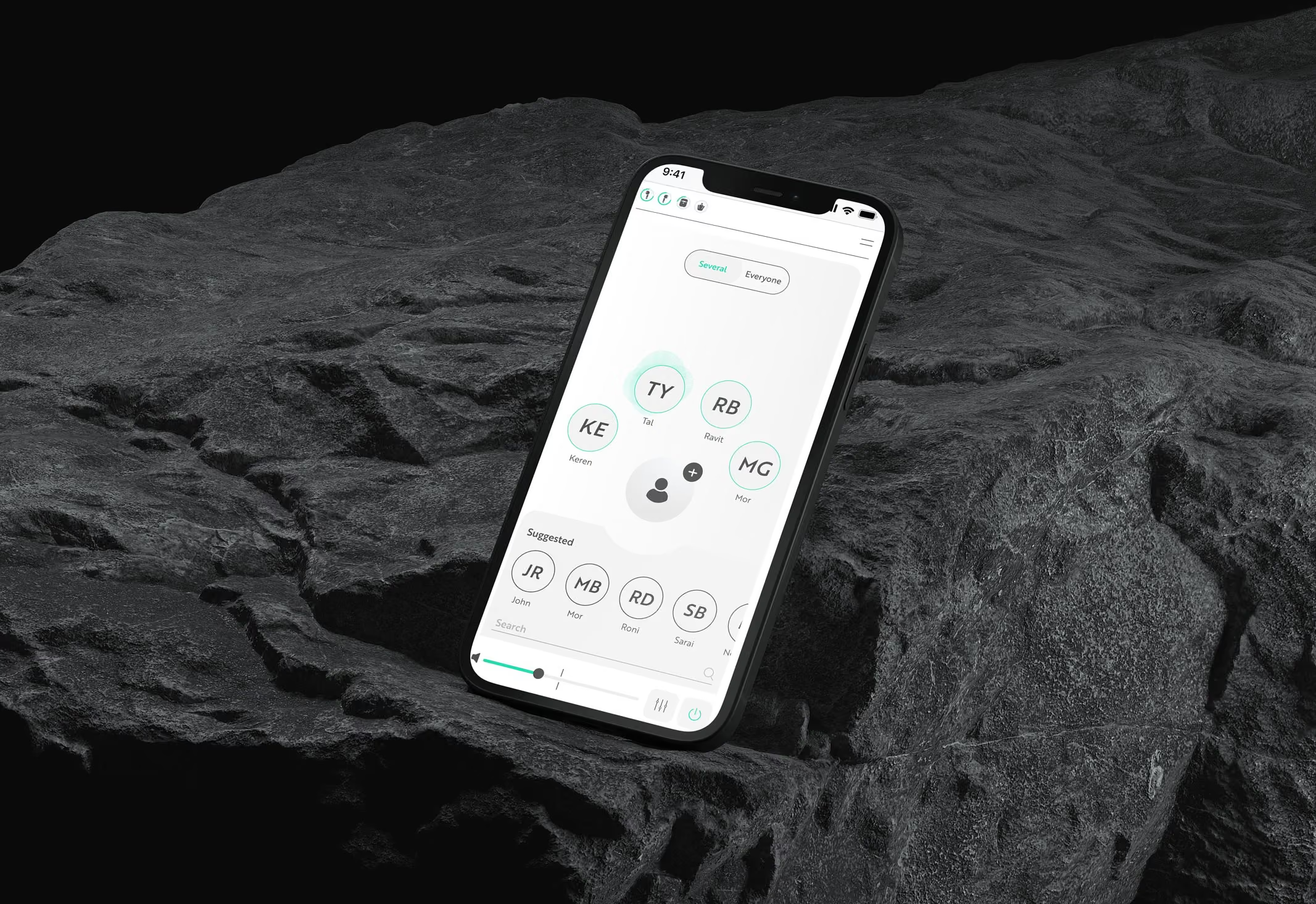
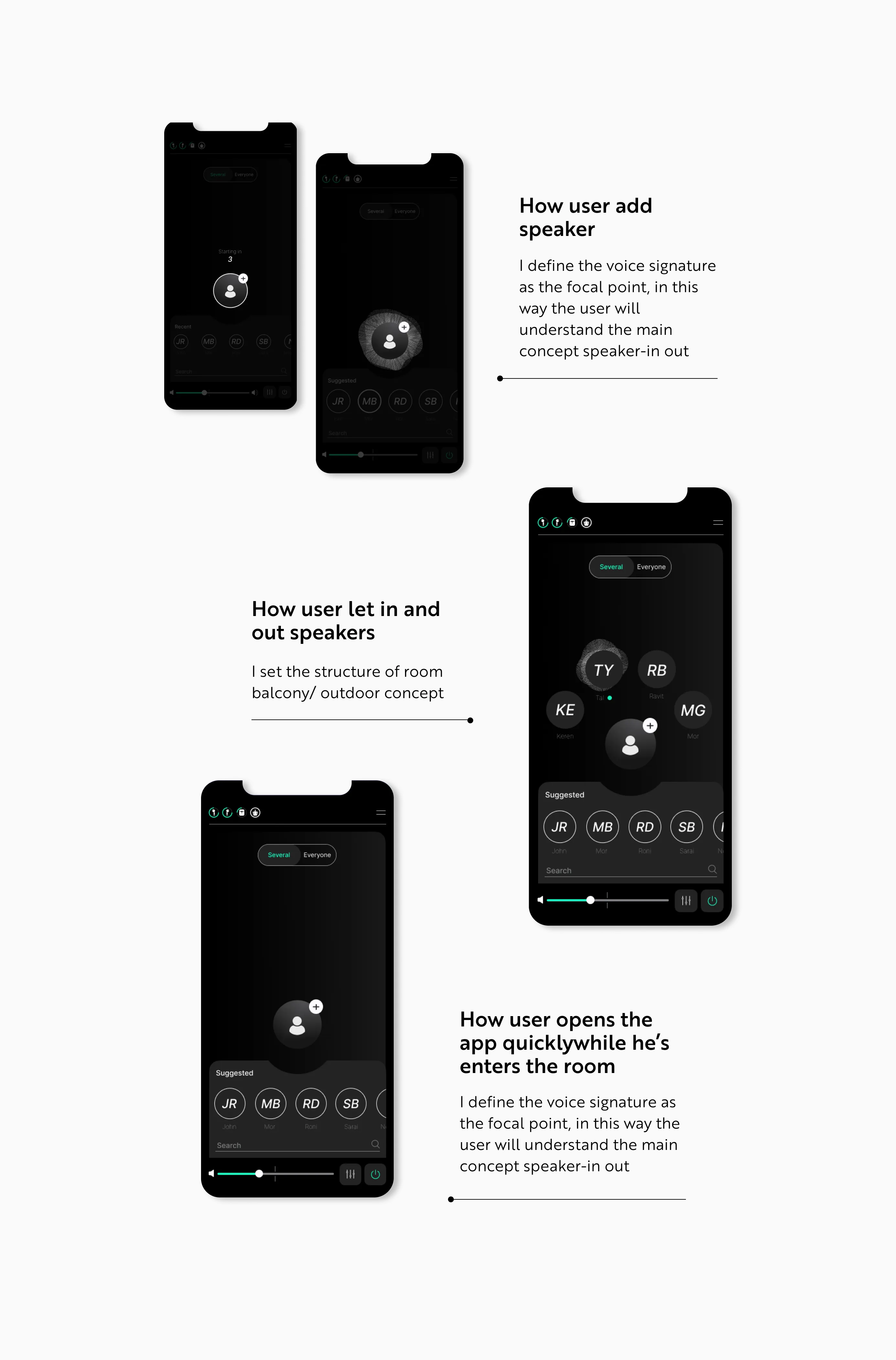
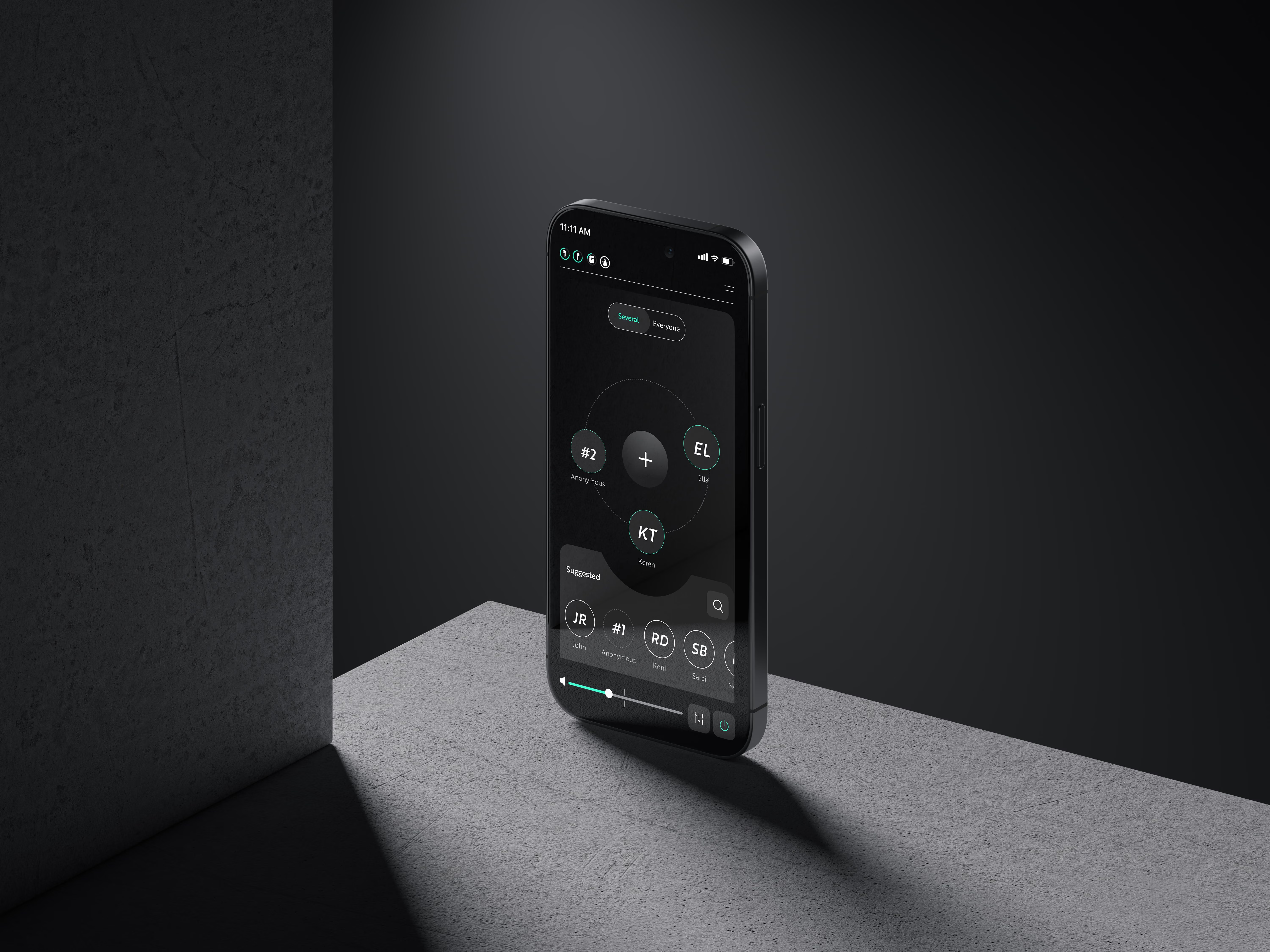
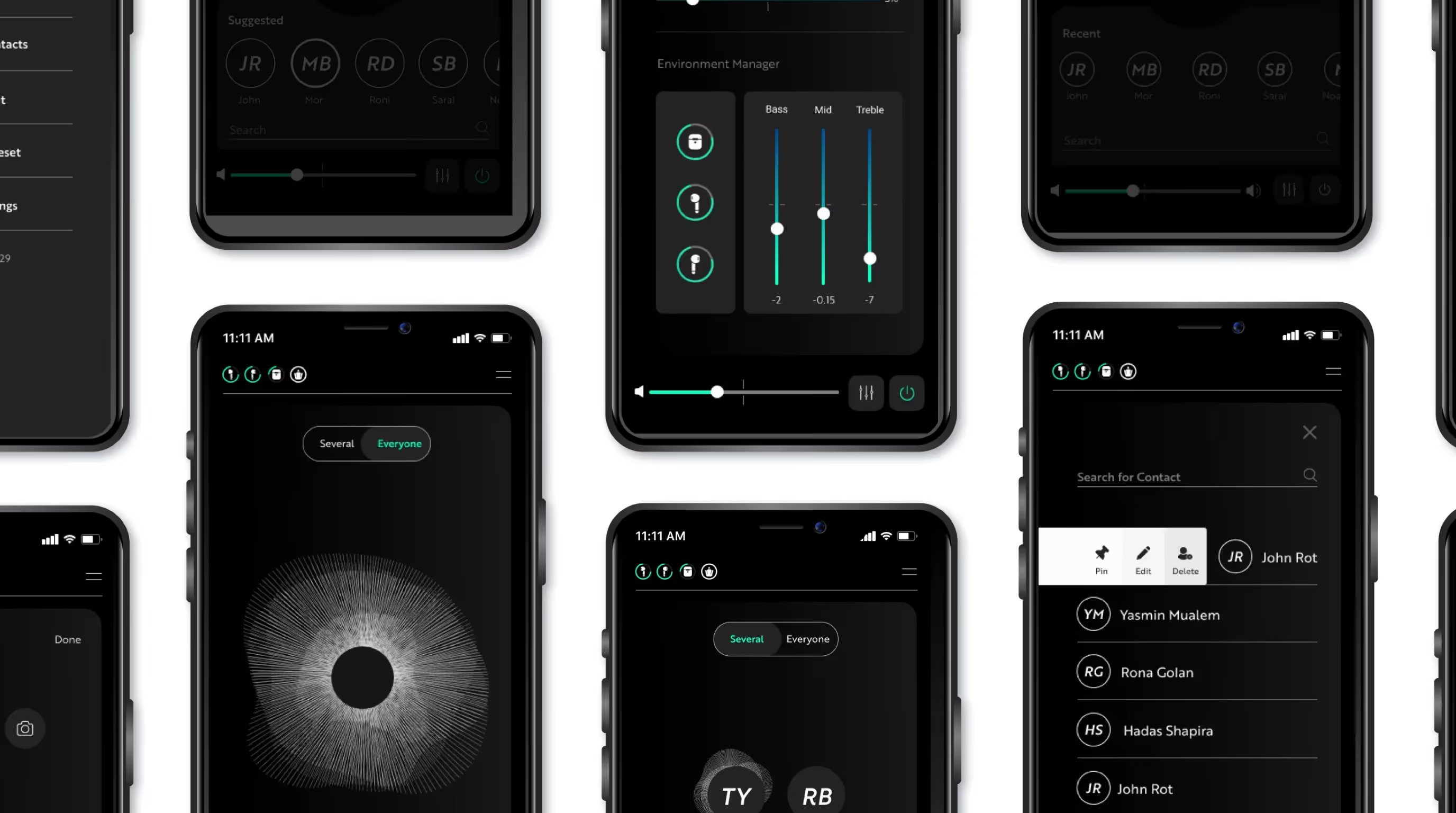
The idea was to let users place people in a visual representation of their actual space, and assign each one a hearing priority just by where they sat in that space. The person directly in front of you — in. The loud table behind you — out. A colleague joining the group — drag them in. It turned an abstract signal-processing operation into something that matched how people already mapped the room in their heads.
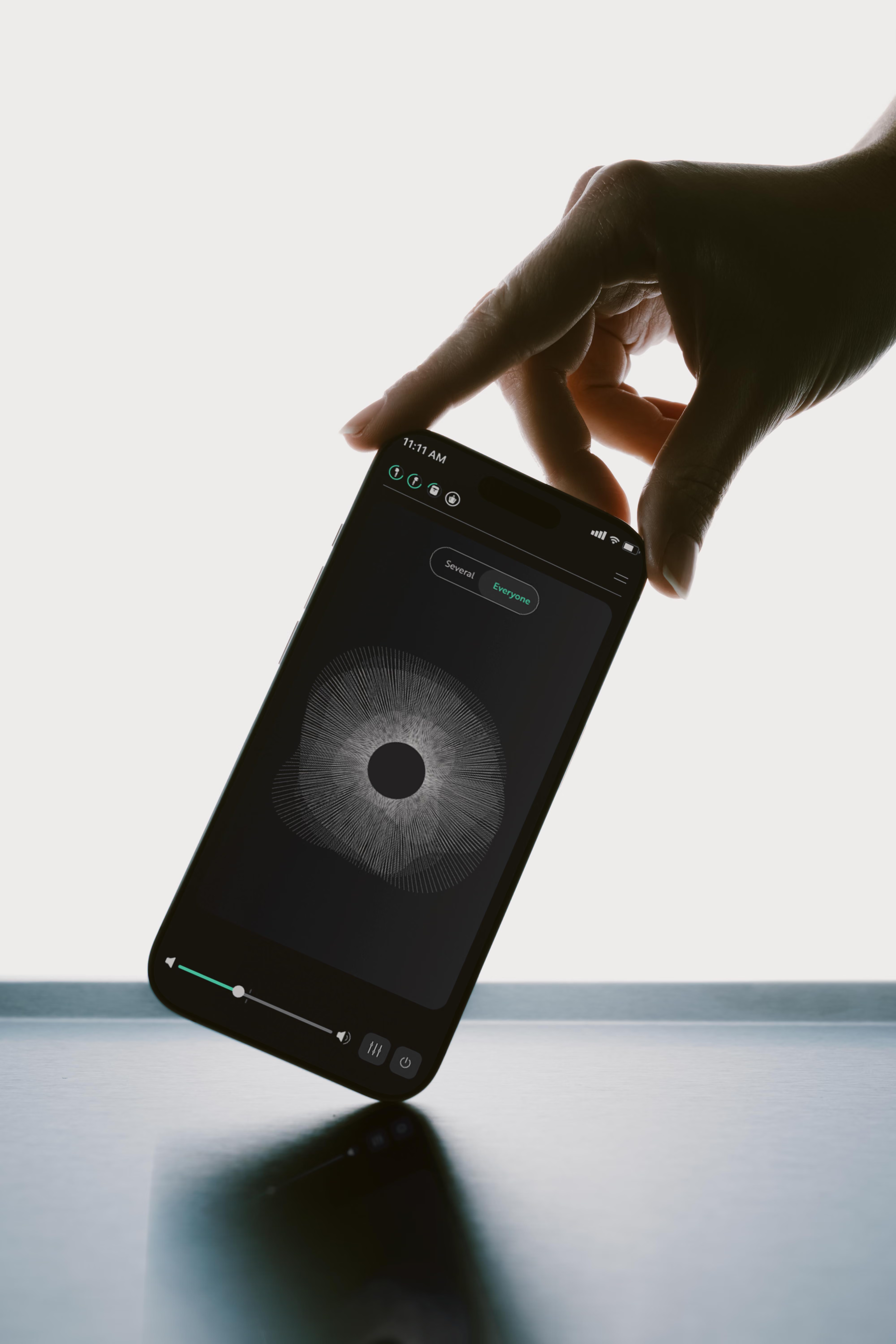
The mental model I anchored everything to was "speaker — in/out." That single concept did a lot of work. Instead of asking users to understand amplification levels and noise gates, I asked them to understand something they already knew intuitively: who's in my conversation, and who's just noise around it. The voice signature became the focal point of the whole interface.
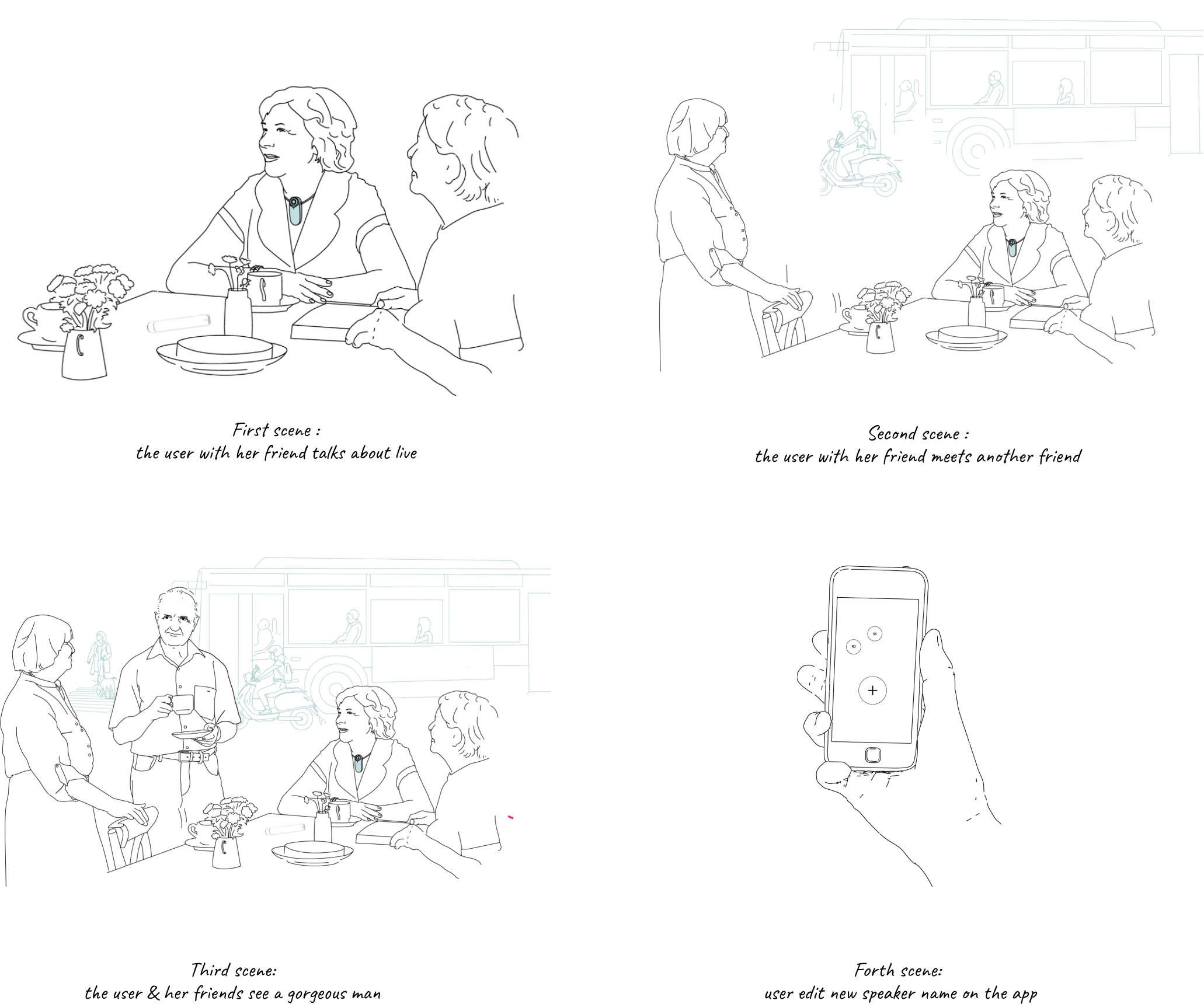
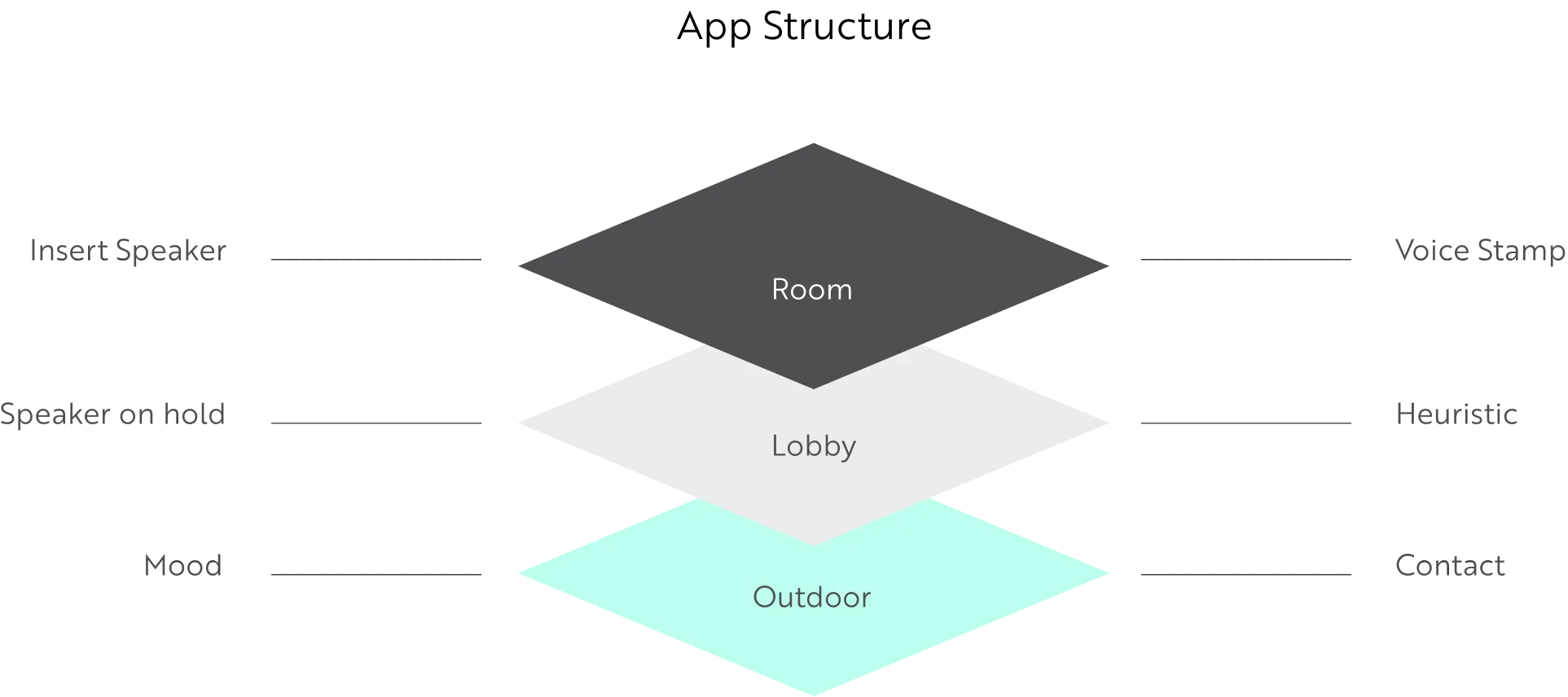
I extended it with an indoor-outdoor idea — a room versus a balcony. Moving from inside to outside is one of the most disorienting transitions for someone with hearing difficulty, because the entire soundscape changes at once. So I wanted a single gesture that reconfigured for that shift without making the user consciously diagnose what had changed about their environment.The deeper principle was that the interface should disappear into the situation rather than sit on top of it.
Someone using OrCam Hear at dinner shouldn't feel like they're operating a piece of medical equipment. They should feel like they're having dinner — and the technology should be doing its work quietly underneath that.
“Skyspaces are among Turrell’s most recognizable works: enclosed chambers that frame an opening to the sky (often called an oculus), paired with carefully calibrated lighting that changes how the eye reads color, depth, and distance. At ARoS, the approach is deliberately staged?”
What OrCam Hear Left Me With
What did this project leave you with as a designer?
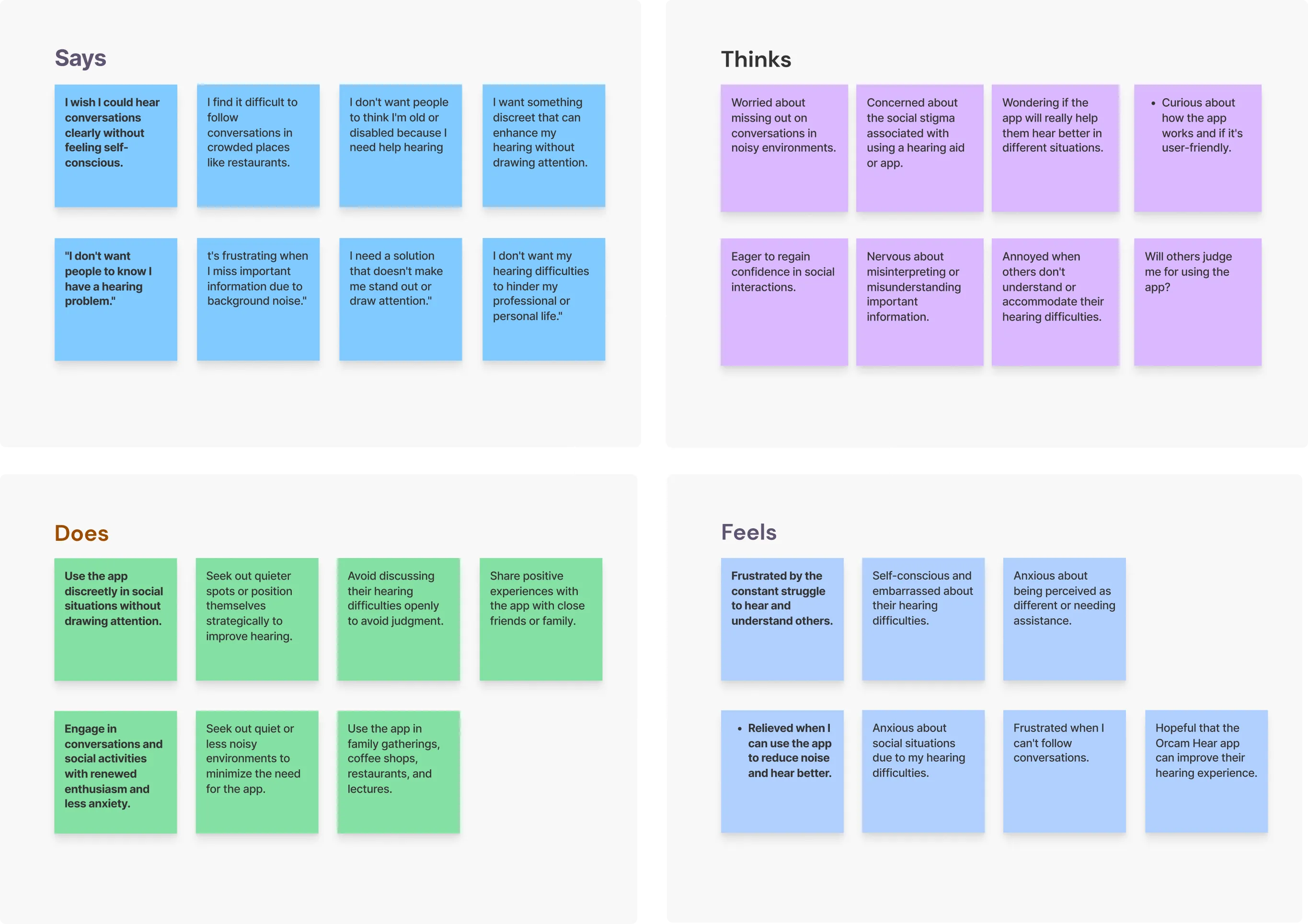
It taught me that the stated problem is often not the real problem. The stated problem was an audio one — isolate a voice, reduce noise. The real problem was a human one — let someone do that without surrendering their dignity.
If I'd taken the brief at face value, I'd have shipped something that worked in a lab and failed at a dinner table.It also made me permanently suspicious of designing for the functional gap alone. Especially in assistive technology, but really everywhere, people live inside social contexts, and a solution that ignores those contexts can be rejected even when it works perfectly. The best accommodation is the one nobody else in the room can see.
And it sharpened something I'd carry into every project afterward — the habit of listening to the exact language people use about their own experience. "She's across the table" wasn't casual phrasing. It was the entire interface, handed to me by a user who didn't know they were designing it.
My job was just to not override it with my own vocabulary.That instinct — that the user is already telling you the structure of the solution if you listen closely enough to how they describe the problem — is the thread that runs from here through everything I did later. At OrCam Hear it was spatial language. On the next projects it became something bigger. But it started with learning to hear what people were already saying.
“Skyspaces are among Turrell’s most recognizable works: enclosed chambers that frame an opening to the sky (often called an oculus), paired with carefully calibrated lighting that changes how the eye reads color, depth, and distance. At ARoS, the approach is deliberately staged?”